Earlier Works
Process Art
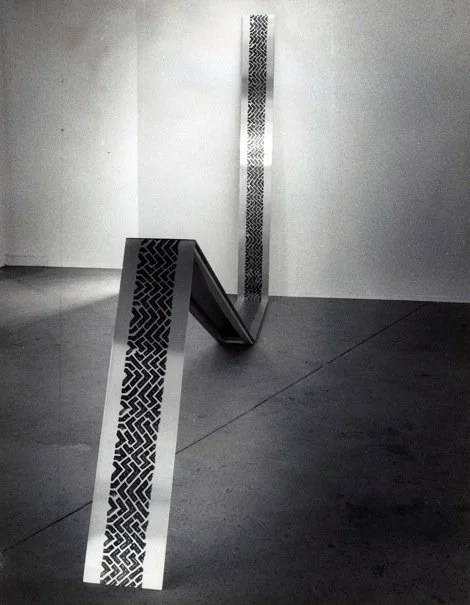
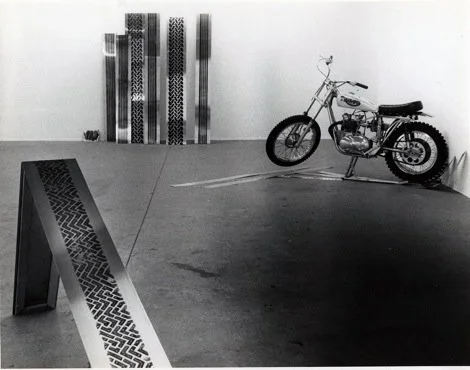
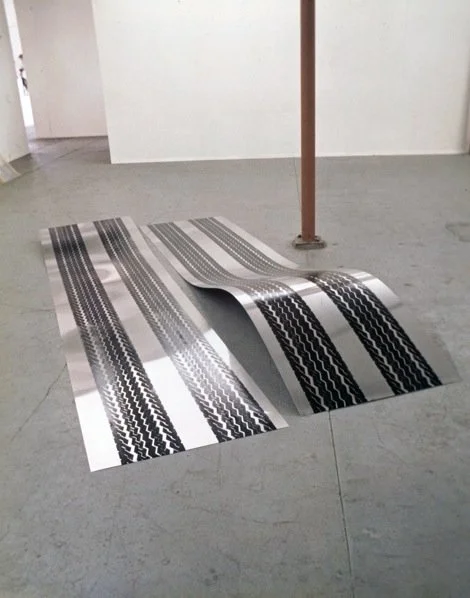
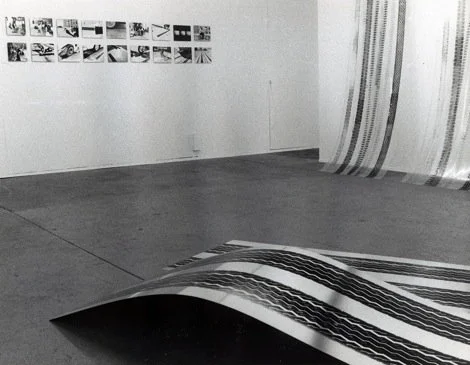
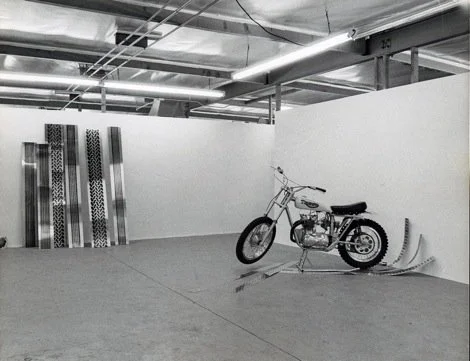
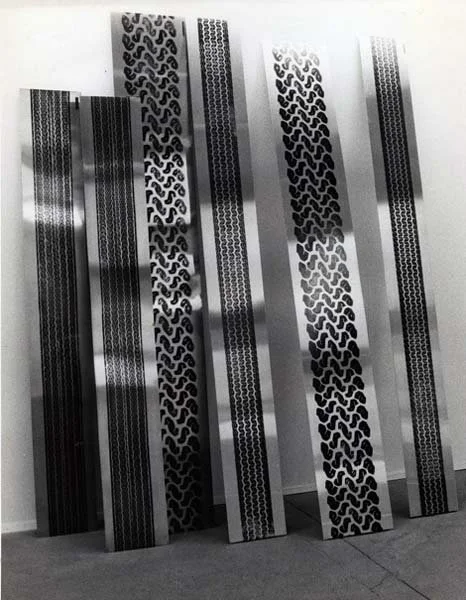
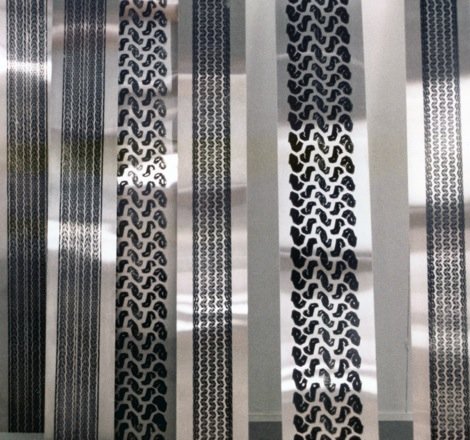
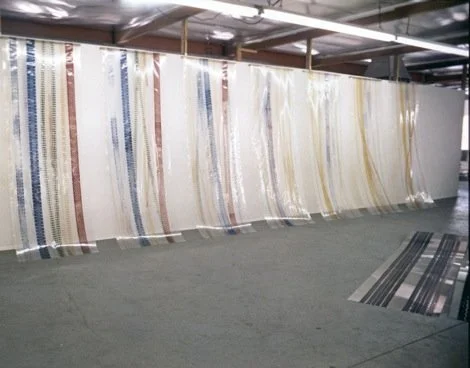
Tire Tracks Series
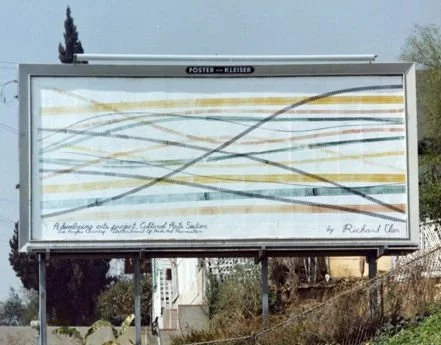
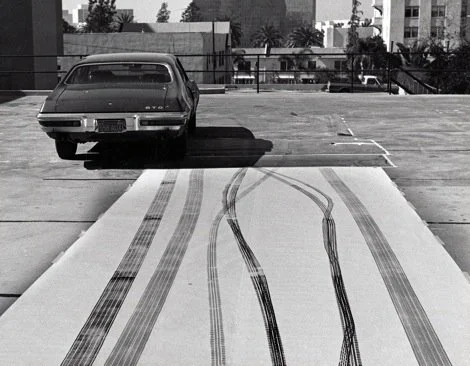
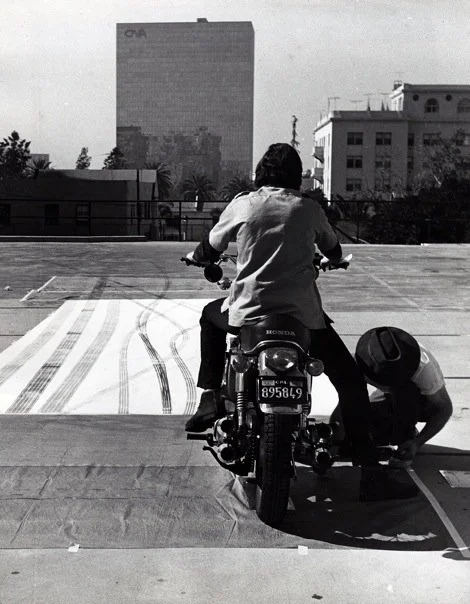
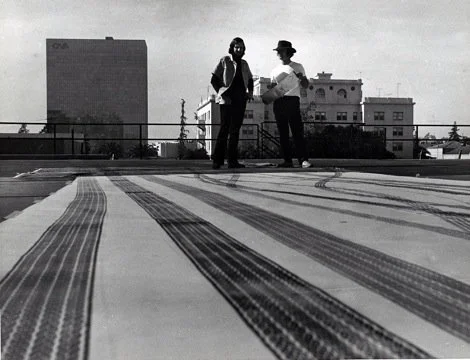
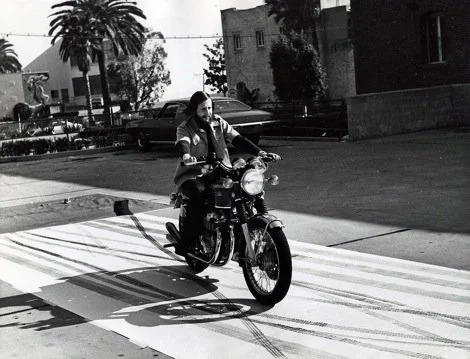
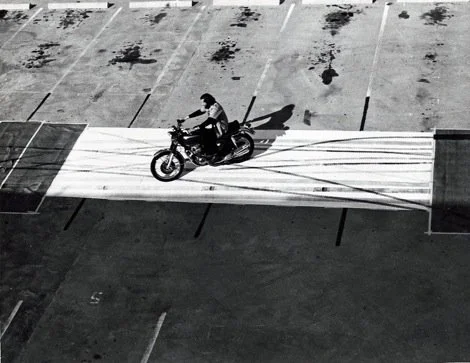
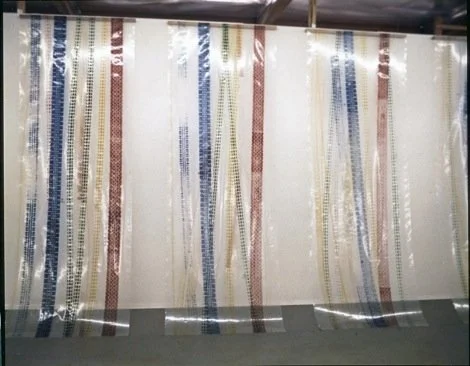
For this project, a small number of LA artists were selected by a jury to create a Billboard that was donated by the billboard company, Foster and Kleiser. I was awarded a 14’ X 48’ billboard that was placed on Brooklyn Avenue in East Los Angeles and would remain there for one month.
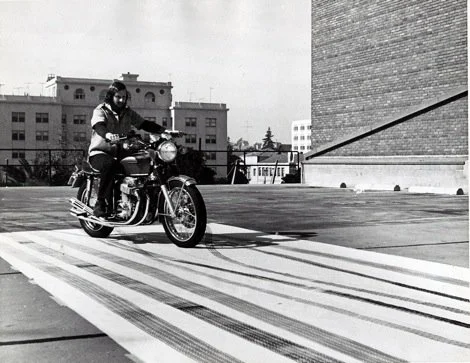
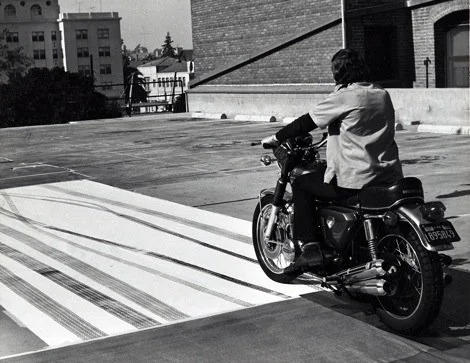
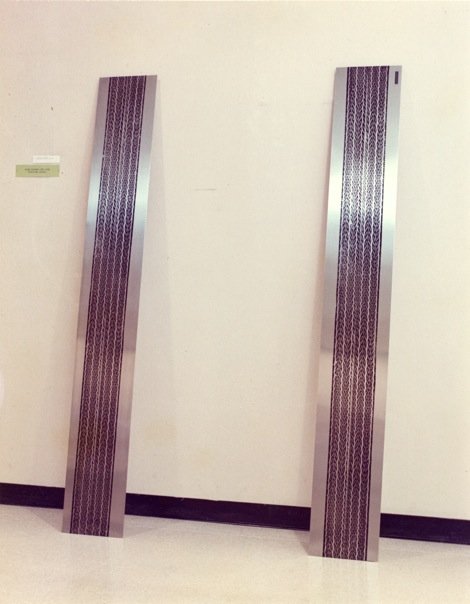
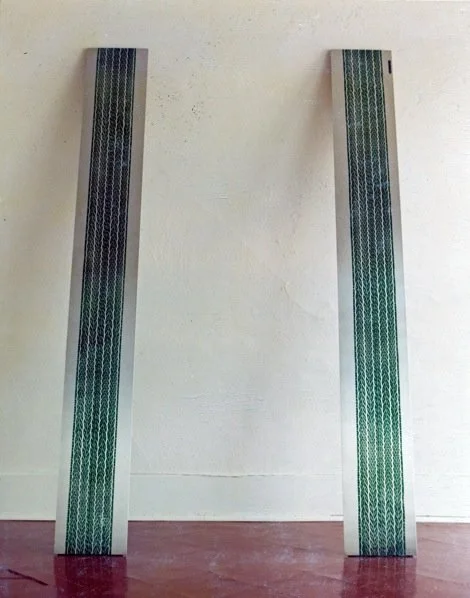
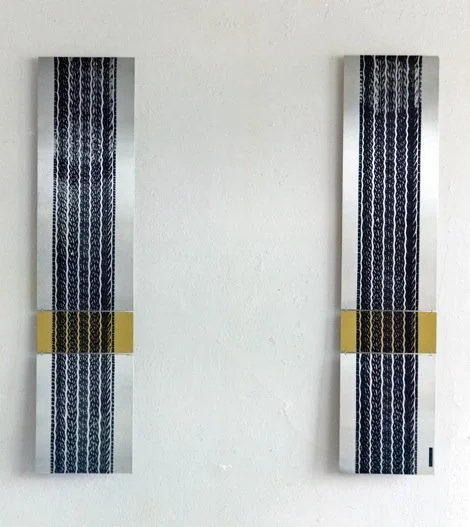
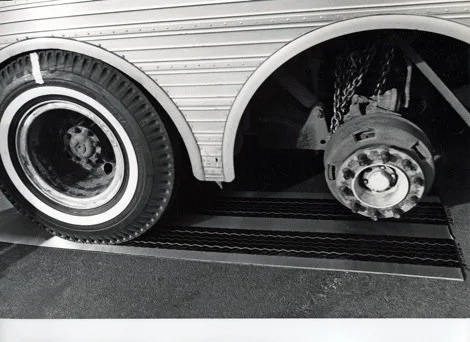
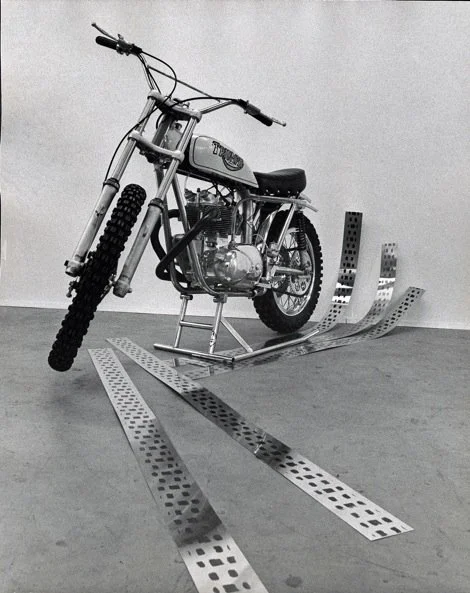
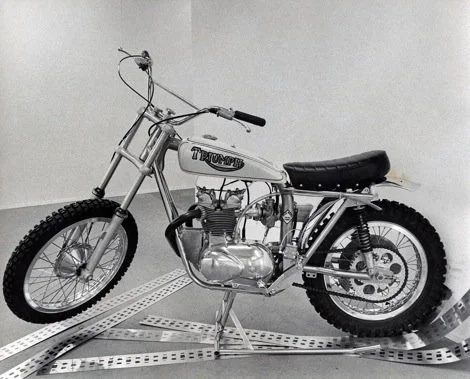
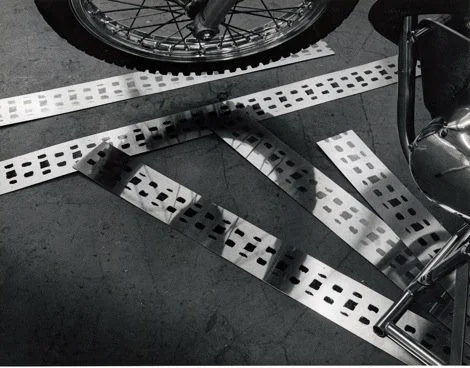
I began to think about the automobile and other motor vehicles that moved on our roads and highways leaving an indelible mark that was not entirely visible and yet had a detrimental effect on our environment. The idea that a tire can rotate unseen for thousands of miles raised a question: How can you make the invisible visible? What came to me was a solution to make tire tracks visible: I devised a method and technique for this by using long sheets of galvanize steel and coating them with lithographer’s ink and then driving vehicles over the inked plates transferring the ink onto the tires and then driving the inked tires over paper such as for the billboard contest.
Eventually, I printed on Stainless Steel and Polyethylene film too all with outstanding results.
Los Angeles Billboard (Tire Tracks)
1972
Ink on paper in process
-
![Two tall, narrow, silver-colored sculptures with intricate dark patterning, standing on a white floor against a plain white wall in an art gallery.]()
Morning Stream
1974
Ink on Stainless Steel
Triad Gallery Los Angeles -
![Two tall, narrow, vertical metallic panels with a green patterned design, standing against a plain beige wall.]()
Summer Stream
1974
Ink on Stainless Steel
Triad Gallery Los Angeles -
![Two vertically oriented artworks with intricate blue patterns, each with a yellow block in the middle, mounted side by side on a plain white wall.]()
Cross Stream
1974
Ink on Stainless Steel
Triad Gallery Los Angeles -
![Abstract black and white patterned sculpture in a gallery space, with parts intersecting and extending vertically and diagonally.]()
Hill Stream
1974
Ink on Stainless Steel
Triad Gallery Los Angeles -
![An art gallery with a bicycle on display, abstract patterned artworks on the wall, and a patterned stand in the foreground.]()
Untitled
1974
Ink on Stainless Steel
Triad Gallery Los Angeles -
![A piece of paper with black and white striped patterns is crumpled on a gray tile floor in an empty room with a white wall and a orange pole.]()
Continental Trailways Bus Tire Tracks
1974
Ink on Stainless Steel
Triad Gallery Los Angeles -
![Gallery with black and white photographs on the wall and fabric with stripes on the floor.]()
Gallery Installation
1974
Ink on Stainless Steel
Triad Gallery Los Angeles -
![Close-up of a vehicle's rear wheel with the tire removed, exposing the brake drum and chain.]()
Continental Trailways Bus Tire Tracks
1974
Ink on Stainless Steel in process
Triad Gallery Los Angeles -
![A vintage snowmobile with metal skis and large tires, positioned indoors against a plain wall.]()
Tire Tracks and Racing Motorcycle (1)
1974
Ink on Stainless Steel
Triad Gallery Los Angeles -
![Vintage Triumph motorcycle with a silver frame, black seat, and knobby tires, positioned on a metal grid surface in front of a plain white wall.]()
Tire Tracks and Racing Motorcycle (2)
1974
Ink on Stainless Steel
Triad Gallery Los Angeles -
![A white metal parking barrier with multiple rectangular holes, lying on a dark surface next to a motorcycle wheel and chrome handlebars.]()
Tire Tracks and Racing Motorcycle (3)
1974
Ink on Stainless Steel
Triad Gallery Los Angeles -
![An indoor space with a motorcycle and four vertical metal racks against a white wall.]()
Gallery Installation
1974
Triad Gallery Los Angeles -
![A display of tall, vertically standing decorative panels with various abstract black and white patterns.]()
9:00 AM 405
1974
Ink on Stainless Steel
Triad Gallery Los Angeles -
![Close-up of metal strips with various perforated patterns, some with small holes and others with intricate cutouts.]()
9:00 AM 405
1974
Ink on Stainless Steel
Triad Gallery Los Angeles -
![Large roll of patterned wallpaper hanging in a store or warehouse.]()
Streams
1974
Polyethylene Film
Triad Gallery Los Angeles -
![Rows of colorful woven textiles hanging in a factory or workshop.]()
Streams
1974
Polyethylene Film
Triad Gallery Los Angeles
Under the Gun
To study the long-term harsh effects of the space environment on a selection of materials, NASA launched the Long Duration Exposure Facility (LDEF) in April 1984 from the US Space Shuttle Challenger.
The intent was to leave the LDEF platform in space for one year to record the effects on space materials from Impacts from micro-meteoroids and orbital debris.
After the accident of the Space Shuttle Challenger, the shuttle program was placed on hold and LDEF remained in orbit for 69 months as there was no way the LDEF platform could be retrieved.
Following a series of delays, it was eventually returned to Earth by the Space Shuttle Columbia in January 1990 where LDEF was taken to the Kennedy Space Center to undergo examination of the various substrates.
I obtained from NASA micrograft’s for many of the orbital debris impacts on the substrates on LDEF. These images were very colorful and bore a resemblance to stained-glass windows. They were mounted on aluminum backings.
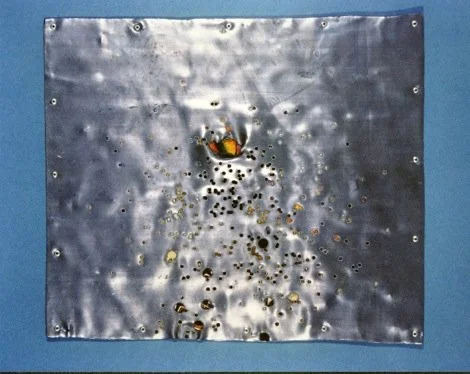
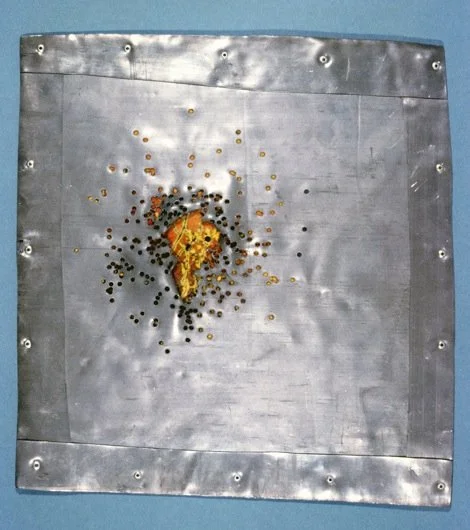
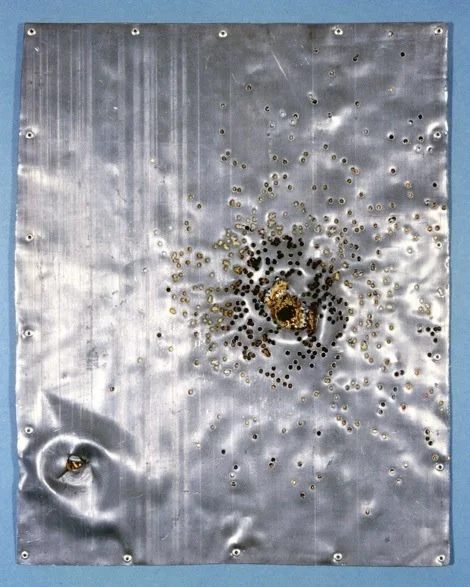
Next, I cut sheets of lead to the same size as the aluminum backings for the LDEF micrograft’s. These lead sheets were carried out to the Mojave Desert where I blasted them with a 12-gauge shotgun. The lead sheets with the shotgun blasts were then overlaid and attached with rivets onto the Aluminum backed LDEF Micrograft’s. Portions of the LDEF micrografts were visible through the shotgun holes in the lead sheets covering the micrograft’s. These three Under the Gun artworks were powerful statements regarding the effects of orbital debris impacts.
-
![A metal sheet with water droplets and a falling water droplet creates a splash pattern, mounted on a blue wall.]()
Under the Gun #1
1997
Lead Sheet shot with a gun -
![A metal shooting target with a burnt piece of bread and bullet holes.]()
Under the Gun #2
1997
Lead Sheet shot with a gun -
![Metal sheet with burn marks and multiple small holes, some showing signs of melting or deformation, against a blue background.]()
Under the Gun #3
1997
Lead Sheet shot with a gun
Earlier Works
Mixed Media
-
![Two rectangular wall art pieces with metallic surfaces and a curved green line across each, hung vertically on a white wall.]()
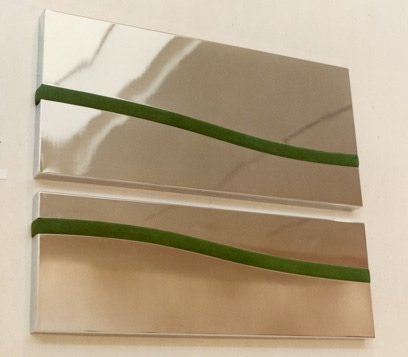
Seismic
1971
Chrome Steel and Foam RubberSeismic is a mixed-media piece that combines hard (chrome steel) and soft (painted foam rubber) materials.
-
![A mosaic-style artwork composed of small square tiles in various shades of gray arranged in a pattern, with a central vertical light streak on a reflective, textured surface.]()
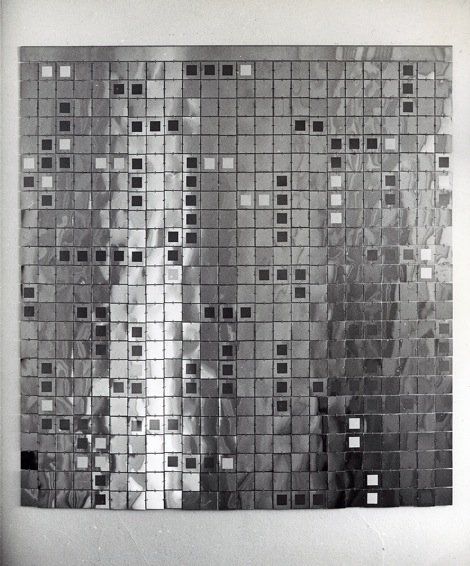
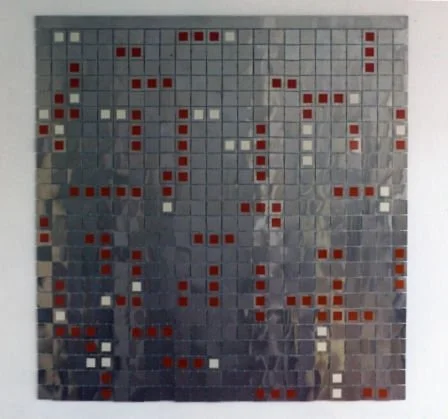
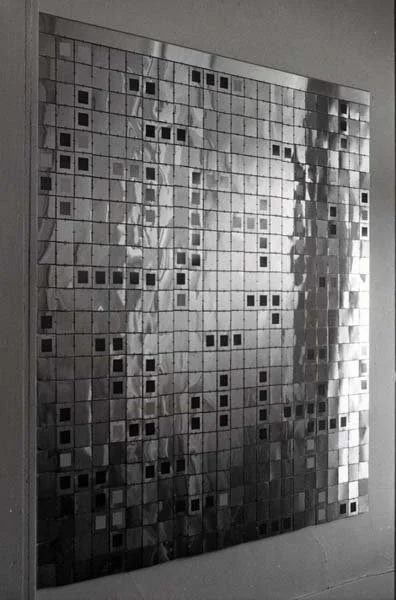
Morning Memory I
1979
Stainless Steel and Reflective Material -
![A mosaic wall with a pattern of small red, white, and gray tiles arranged in abstract design.]()
Morning Memory I
1979
Stainless Steel and Reflective Material -
![A wall of small reflective tiles arranged in a grid pattern, creating a mosaic effect.]()
Morning Memory I
1979
Stainless Steel and Reflective Material -
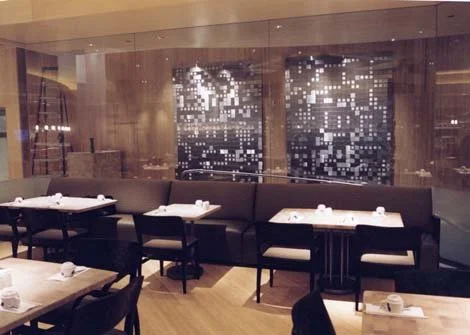
![Empty restaurant dining area with tables set for guests, dark chairs, and abstract black and white artwork on the wooden wall in the background.]()
Morning Memory II
2000
Stainless Steel and Reflective Material
MGM Grand Hotel, Las Vegas -
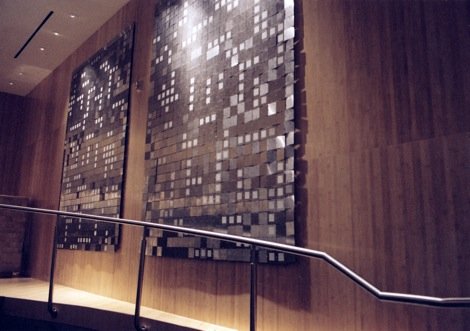
![Decorative wall with square metal panels in a modern interior space.]()
Morning Memory II
2000
Stainless Steel and Reflective Material
MGM Grand Hotel, Las Vegas -
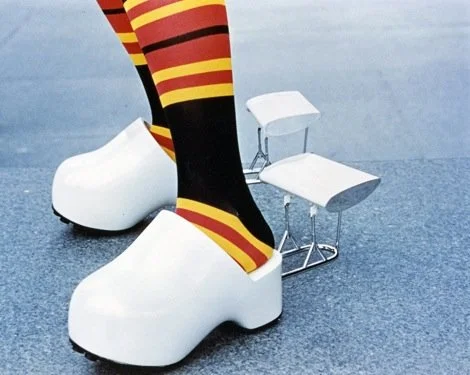
![Person wearing striped socks and large white shoes, sitting on a small clear chair.]()
Ground Effects
1984
Fiberglass, White Pearlescent Lacquer and Chrome20th Century version of Mercury’s Winged Sandals (Talaria) with stabilizers such as those found on some race cars; Formula One and Indianapolis 500. The soles of these clogs have a pattern similar to tire tracks and could be used for making prints. The clogs themselves were made by Famolare. Artist Richard Clar designed and made the chrome and painted wings.
-
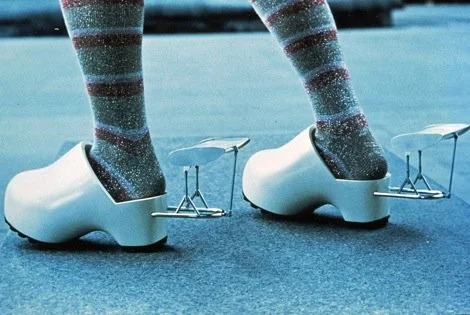
![Close-up of a person wearing sparkly striped socks and white clown shoes with metal clickers attached, standing on a blue surface.]()
Ground Effects
1984
Fiberglass, White Pearlescent Lacquer and Chrome -
![A white motorcycle helmet with added electronic equipment, including a small screen, antenna, and a side-mounted mirror, against a dark background.]()
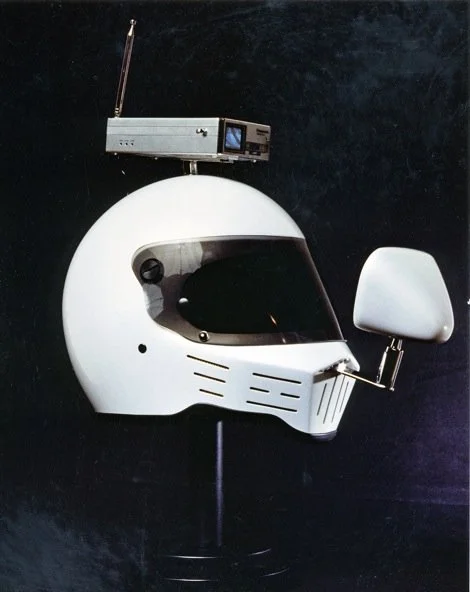
Tête-à-Tête
1984
Fiberglass helmet and electronicsFinished in white pearlescent lacquer
Tête-à-Tête addresses the Isolating effect of television. A motorcycle crash helmet houses on top, a miniature Panasonic TV. On the front portion of the helmet, is mounted a magnifying rear-view mirror which blocks the forward view of the person wearing the helmet and forces them to view the TV on top of the helmet, So the Tête-à-Tête is really with oneself.